Kestra Agent Skills
The official Claude Code skills for Kestra — letting AI agents deploy flows, migrate tools, run QA, and automate product workflows entirely through natural language.
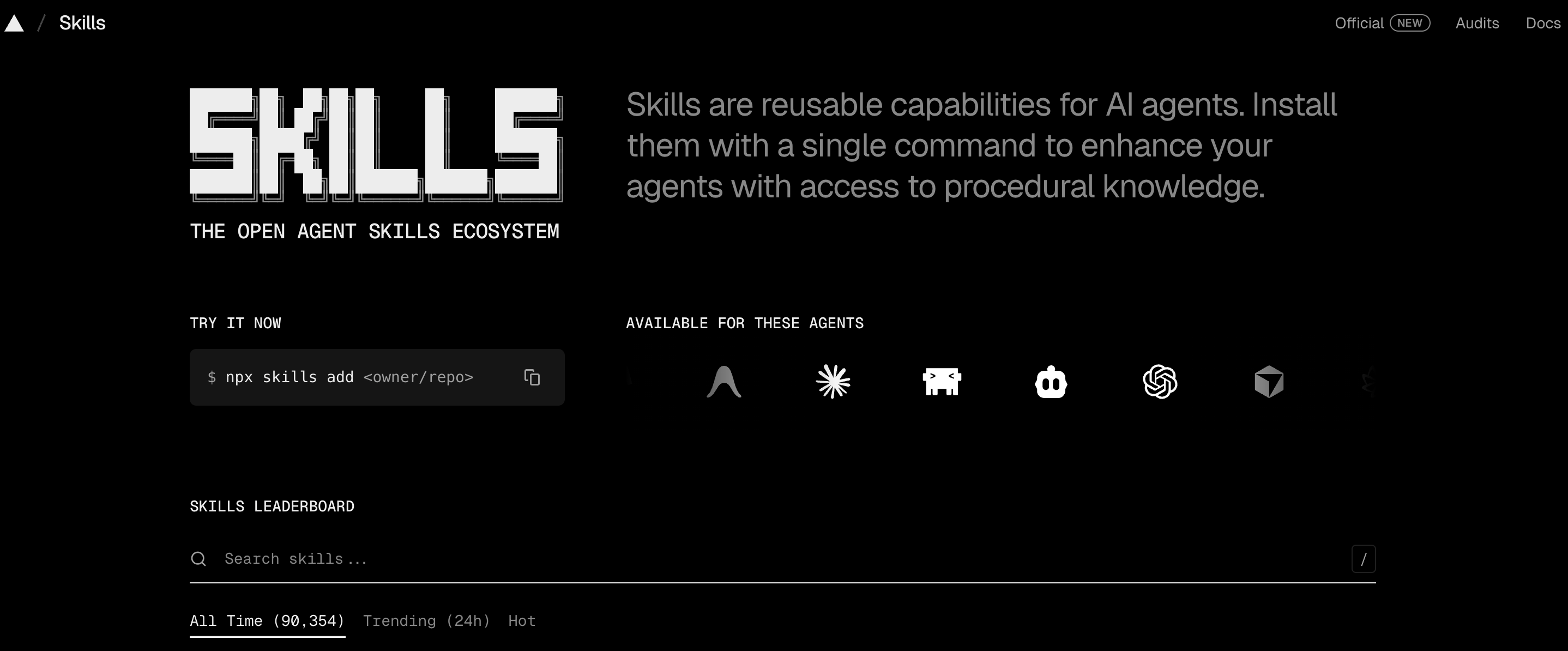
Overview
Kestra Agent Skills are the official Claude Code integration for Kestra — the open-source workflow orchestration platform. They give AI agents a structured, reliable interface to interact with Kestra: deploying flows, reading namespace files, triggering executions, and navigating the full platform surface through natural language.
I wrote the skills, created the official Kestra repository, and battle-tested them across a wide range of real-world use cases. The result is a set of capabilities that make Kestra genuinely usable from an agentic context — not just as a tool to query, but as an environment to reason about and operate autonomously.
Battle-Tested Use Cases
Tool Migration to Kestra
Agents can take existing automation scripts, Airflow DAGs, or ad-hoc pipelines and migrate them into idiomatic Kestra flows — preserving logic, mapping to the right plugins, and deploying in a single session.
Flow Deployment
Write a flow description in plain language and let the agent generate, validate, and deploy it to the right namespace — without touching the UI or running any CLI commands manually.
QA Automation
Agents can trigger executions, monitor their status, inspect logs and outputs, and surface failures with context — closing the feedback loop between development and validation without human intervention at each step.
Product Automation
Internal product workflows — content pipelines, data syncs, scheduled reports — can be built, deployed, and iterated on entirely through conversation, accelerating the path from idea to running workflow.
What the Skills Expose
The skills wrap Kestra's core API surface into agent-friendly operations that compose naturally:
- →Flow management — list, retrieve, create, update, and deploy flows across namespaces
- →Execution control — trigger executions with inputs, wait for completion, inspect outputs and logs
- →Namespace files — read, upload, and manage scripts and config files stored alongside flows
- →Plugin discovery — query available plugins and their task schemas to generate valid flow YAML
Design Philosophy
Building agent skills is a different discipline than building APIs or CLIs. The interface isn't consumed by a human reading docs — it's consumed by a language model reasoning about what to do next. That shifts the design constraints entirely.
Each skill was designed to minimize ambiguity: clear names, predictable outputs, and enough context in responses for the agent to reason correctly without needing to ask follow-up questions. Error messages are written to be interpretable by an LLM, not just a human.
The test for a good skill isn't whether a developer can use it — it's whether an agent can complete a real task end-to-end without getting stuck. Every use case I tested pushed that boundary further, and the skills evolved with each round.
Try Kestra Agent Skills
Official documentation and setup guide.